
Vanek 2026 (Belarus, Czechia, Lithuania, Romania, USA)
A series of newly commissioned short plays using Václav Havel’s character, Ferdinand Vaněk (or his relatives and descendants) and placing them in modern scenarios, imaging them in the world of today. Vanek was based on Havel himself but because a symbol of the dissident movement in Czechoslovakia. He has been used by multiple playwrights, including Tom Stoppard. This year, we have reached out to past collaborators to continue Havel's legacy, in the year of his 90th birthday.
Featuring plays by Maryia Bialkovich (Belarus), Edward Einhorn (USA), Gabriele Labanauskaite (Lithuania), Natalie Kocab (Czechia), and Norman Manea/Saviana Stanescu (Romania).
With: Vas Eli, Nalina Mann, Liam Luis Martin, Nathaniel Meek, Grant Neale, Štěpán Šimek, Maxwell Zener
Awkward Pause
By Maryia Bialkovich (Belarus)
Directed by Edward Einhorn (USA)
Meeting in Amsterdam
Written and directed by Edward Einhorn (USA)
The Resistance Gene
by Gabriele Labanauskaite (Lithuania)
Directed by Štěpán Šimek (Czechia)
The Václav Havel Airport
by Natalie Kocab (Czechia)
Directed by Štěpán Šimek (Czechia)
Hooligan's Return - Barney Greengrass scene
Adapted by Saviana Stanescu (Romania)
From the book by Norman Manea (Romania)
Performed in English.
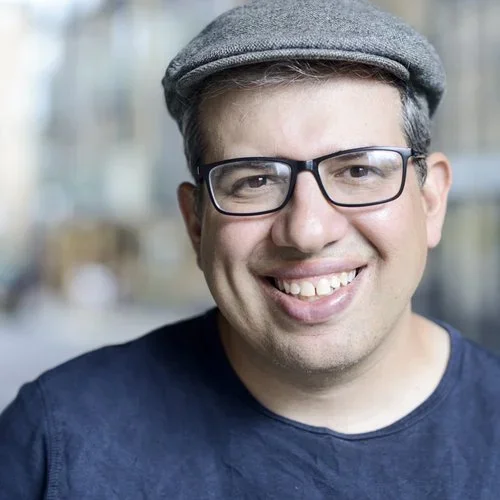
Edward Einhorn is a playwright, director, translator, librettist, theater journalist, and novelist. He is the Artistic Director of both Untitled Theater Company No.61 and the Rehearsal for Truth International Theater Festival. In 2006, he curated the Václav Havel Festival, which included all of Havel’s work, at multiple theaters throughout New York City, with Havel in attendance. Since then some of his work includes Cabaret in Captivity, songs and sketches from Terezin, written during the Holocaust performed at multiple venues in New York, London, ans Washington DC; The Marriage of Alice B. Toklas by Gertrude Stein, which received at Critics Pick from The New York Times chief reviewer Jesse Green, performed in at HERE in New York and Off-West End at The Jermyn Street Theatre in London; The Pig, or Václav Havel’s Hunt for a Pig, adapted from the work by Václav Havel and Vladimír Morávek, which played at The New Ohio and 3LD Theatres in New York and received a New York Times and Village Voice Critics Pick; The Velvet Oratorio, an opera-theater production following Havel’s character Vaněk through the Velvet Revolution, which played at Lincoln Center’s Walter Bruno Theatre and Bohemian National Hall; and directing The Last Cyclist, a play by Karel Švenk written in Terezin, which performed at La MaMa and was also shown on PBS affiliate WNET as part of their Theater Close Up series.
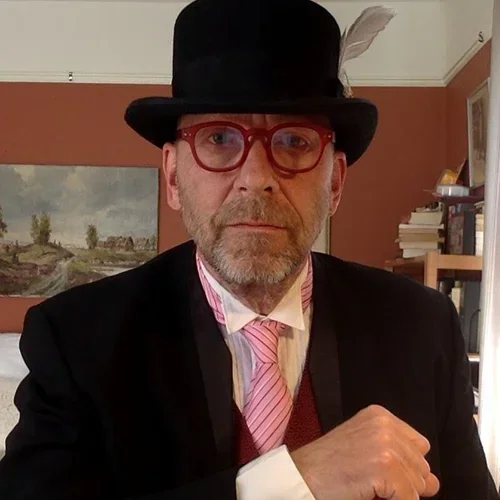
STEPAN SIMEK is a Prague-born director, translator, adaptor, and professor of theater at Lewis & Clark College in Portland, Oregon. Stepan has translated plays from Czech, German, and Russian, most notably works by Vaclav Havel, Petr Zelenka, Iva Volankova, David Drabek, Peter Handke, and Anton Chekhov. His translations have been published in a number of anthologies, staged across the USA, and received the 2006 PEN America Translation Award and the 2018 Eurodram Award for best English translation of a foreign-language play. He has directed over forty productions in Europe, Portland, Seattle, San Francisco, and New York. He adapted for stage several novels and literary works, such as Kafka’s Amerika, Wilde’s The Picture of Dorian Gray, Bulgakhov’s Heart of the Dog, and Francois Villon’s The Testament. In addition, Stepan writes on the contemporary Czech theater and his articles have appeared in TheatreForum and SEEP (Slavic and East European Performance).
Gabriele Labanauskaite is a poetess and playwright, writing for theatre and opera. At the moment she teaches creative writing and playwriting at National Music and Theatre Academy in Vilnius, Lithuania. Gabriele was also a performer and an organizer of various festivals, creating a platform for interdisciplinary artists – locally and globally. Gabriele believes, that we can change the world into a better place for everyone, even if each of us make a small step towards it. Gabriele‘s plays and librettos for operas where staged in Lithuania and worldwide. From 2003 Gabrielė has written mostly about Queer + topics, freedom of speech and behavior, and equal rights for everyone. Books include Dramatica (2017); Collection of Plays (Lithuanian and English, 2022); Lear/s (2024). Poetry albums include Nėra okeano‚ (There‘s no Ocean, CD/DVD, 2009; Niagara (CD, 2010); Kraujuojantis okeanas (Ocean Is Bleeding, CD, 2013)
Norman Manea and Václav Havel were both born in 1936, a historical convergence of two of the most significant voices in literary dissent in Eastern Europe during the struggle against totalitarian communism. Geographically separated, Havel, born in Prague, Czechoslovakia, and Manea in Suceava, Romania, they spent the greater part of their life under the dark shadow of communist terror, fighting for normality and spiritual freedom. Both writers employed sharp irony, and humor in their work, essential tools of intellectual defense to maintain lucidity and courage and to survive under tyranny’s nightmare. Despite their different destinies, what unite and define these two writers is the firm conviction that individuality and spiritual independence are fundamental human value. Manea embrace the “ aesthetics of the circus”in his work, notably, in “ On clowns: The Dictator and the Artist. Havel explores the philosophical morality of the common men in his essential essay “ The Power of the Powerless”. Havel was a political fighter in the leadership of Velvet Revolution and the Charter77, Manea “ the hooligan” who survived both fascism and communism, a master of prose in “The Hooligan’s Return and Compulsory Happiness” gives voice to human dignity and the value of democracy. Their work, memories and essays are in our day, for the young generation and not only, vital guides in defining democracy and human rights. Two different and remarkable examples of intellectual defiance in the dangerous, difficult time serving as still vivid examples of dignity and encouragement whether in the theaters in Prague or in the novels in Romanian exile their voices remain today. To remember today Vaclav Havel and Norman Manea means to pay the necessary homage to brilliant dissents and the unimaginable dignity.
Maryia Bialkovich was born in 1991 (Minsk, Belarus). In 2014 she finished studying at the School of young writers by the Union of Belarusian Writers. In 2014 – 2019 Maryia studied and worked in Belarus Free Theatre as an actress, a stage manager and a playwright. Maryia Bialkovich’s plays include Any Spot With Marks Left Behind, Wellbeing, Peaceful People and Torn Loops. Maryia is a co-author of three productions by Belarus Free Theatre: Dogs of Europe, Tomorrow I Was Always a Lion and The Master Had a Talking Sparrow. Dramaturgical adaptations and plays by Maryia Bialkovich were staged by Belarus Free Theatre (Belarus, UK) and Malenky Theatre (Israel). They were presented as various readings in Belarus, Estonia, Israel, Kazakhstan and Russia. Plays by Maryia Bialkovich are translated into English, German and Czech languages. Plays by Maryia are included in short-lists and lists of plays recommended for staging by playwright competitions AURORA, Liubimovka, Centre for Belarusian Dramaturgy, Remarka, Writebox.
Part of Rehearsal for Truth International Theater Festival honoring Václav Havel, produced by the Vaclav Havel Center and the Bohemian Benevolent and Literary Association.
ABOUT THE 2026 REHEARSAL FOR TRUTH INTERNATIONAL THEATER FESTIVAL
Rehearsal for Truth International Theater Festival, honoring Václav Havel, is a showcase of contemporary European theater organized each year in New York City. Conceived in 2017 as a shared endeavor of the Václav Havel Center (VHC) and Bohemian Benevolent and Literary Association (BBLA), the festival honors the legacy of Czech playwright, dissident and political thinker Vaclav Havel. The 2026 festival is being produced in partnership with Untitled Theater Company No. 61.
Each edition of Rehearsal for Truth Theater Festival addresses current sociopolitical trends in Central and Eastern Europe, offering New York audiences a unique opportunity to witness the region’s theatrical zeitgeist.
This program is supported, in part, by public funds from the New York City Department of Cultural Affairs in partnership with the City Council.